Websites / 5 min read
Custom website or template? Start with the job.
Compare a custom website and a template around content, editing, accessibility, ongoing cost and the customer journey for a small service business.
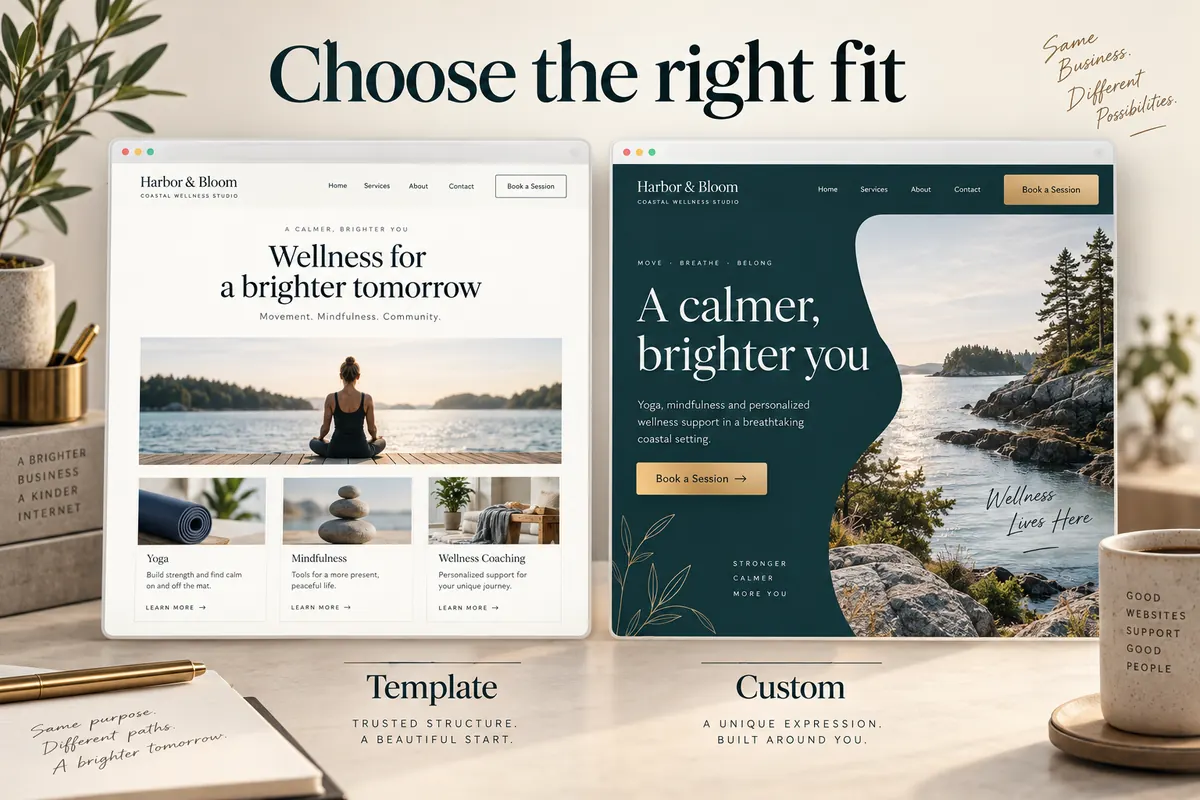
Both approaches can work. Fit is the question.
A template offers an existing visual and structural starting point. A custom website can organize the experience around the business’s particular story and customer journey. Neither label tells you, by itself, whether a site is clear, fast, accessible or easy to maintain.
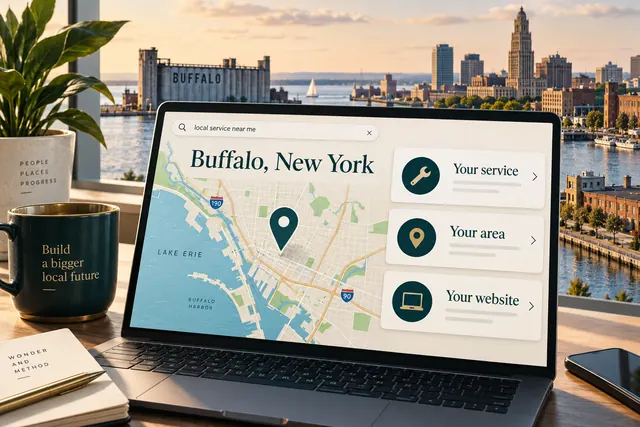
For a Buffalo small business choosing a website, begin with content and operations. What must customers understand? How often will the site change? Who will edit it? What can you invest in the build and in maintaining it? Those answers matter more than how many effects appear in a demo.
Compare the same customer journey
| Decision | Template starting point | Custom direction |
|---|---|---|
| Service story | Does the existing page structure fit your content? | Can a tailored structure explain the service more clearly? |
| Editing | Which changes does the included editor support? | Is editing technical, managed or supported by a separately scoped CMS? |
| Distinctive design | How much can be changed without fragile overrides? | Which original design decisions matter to the customer? |
| Ongoing cost | What subscriptions, add-ons and platform limits apply? | What hosting, provider and maintenance costs remain? |
| Handoff | What can you export or move to another provider? | Which paid source, assets and operating notes do you receive? |
Try a small comparison before committing: use the same service headline, explanation, proof and inquiry fields in each proposed structure. Walk through it on a phone. Notice where the content feels forced, where the next step disappears and which changes require workarounds.
When a template may be a sensible starting point
A template may fit when the service is straightforward, the existing layout supports the content and the team values a familiar editing environment. It can reduce some initial design decisions. Still check the actual plan limits, recurring costs, access controls and export options.
Do not assume that buying a template includes content strategy, copy, photography, migration, form delivery or accessibility review. Those responsibilities exist even when the layout is already drawn. Agree who completes and verifies them.
When custom work earns its place
Custom work is useful when a distinctive visual identity, a specific service explanation or a carefully designed inquiry journey materially improves the experience. It creates room to make deliberate decisions about composition, language, imagery and interaction instead of fitting everything into an inherited layout.
That room still needs boundaries. A custom marketing website is not automatically a booking platform, store or application. At Wonder and Method, the standard build is a custom static website. Self-service publishing and complex features require separate scope. If frequent editing is central to your business, settle that requirement early.
Judge the finished experience
- Can a new visitor explain what the business does and who it serves?
- Is the primary next step easy to find and complete on a phone?
- Can the main journey be used with a keyboard and reduced motion?
- Are prices or scope boundaries understandable?
- Does the form save the inquiry and provide a useful confirmation?
- Can the owner maintain the site and recover it when needed?
Premium design is a coherent experience: the right content, considered visual detail and reliable behavior. Motion can add character when it supports that experience; it should also pause cleanly and respect the person using the site.
Explore our studio study, read the custom website scope, compare website budget examples, or talk through the fit.